Why Professional Cleaning Is the “Secret Ingredient” to Your Restaurant’s Profitability

In the restaurant industry, food quality is essential, but cleanliness is the foundation of survival. A customer might forgive slow service on a busy night, but they will rarely forgive dirty bathrooms or a sticky table.
Delegating deep cleaning to kitchen or service staff at the end of their shift may seem like a saving at first glance. In reality, it is a hidden cost that hurts profitability and puts your operating license at risk.
Below, we outline several reasons why outsourcing cleaning to professionals is not an expense, but a strategic investment, analyzing costs, quality, and regulatory compliance.
1. The Difference in Operating Costs: The Illusion of In-House Savings
The most common mistake is thinking: “Why pay an external company if I already pay my employees?” The answer lies in efficiency and opportunity cost.
Payroll optimization: When kitchen or front-of-house staff clean at the end of their shift, they do it while tired and often at overtime or late-night rates. A professional team does the same job in half the time because they use industrial equipment and standardized processes.
Burnout and turnover reduction: The industry has one of the highest turnover rates (often exceeding 70% annually). Forcing a talented cook to degrease hoods at 2:00 AM increases job dissatisfaction.
Savings on supplies and equipment: By hiring a professional service, you no longer need to purchase, store, and manage inventory of expensive industrial chemicals and cleaning machinery.
According to facilities management studies, outsourcing cleaning can reduce direct and indirect maintenance-related operating costs by up to 15–20%.
2. Quality and Safety: “Cleaning” Is Not the Same as “Sanitizing”
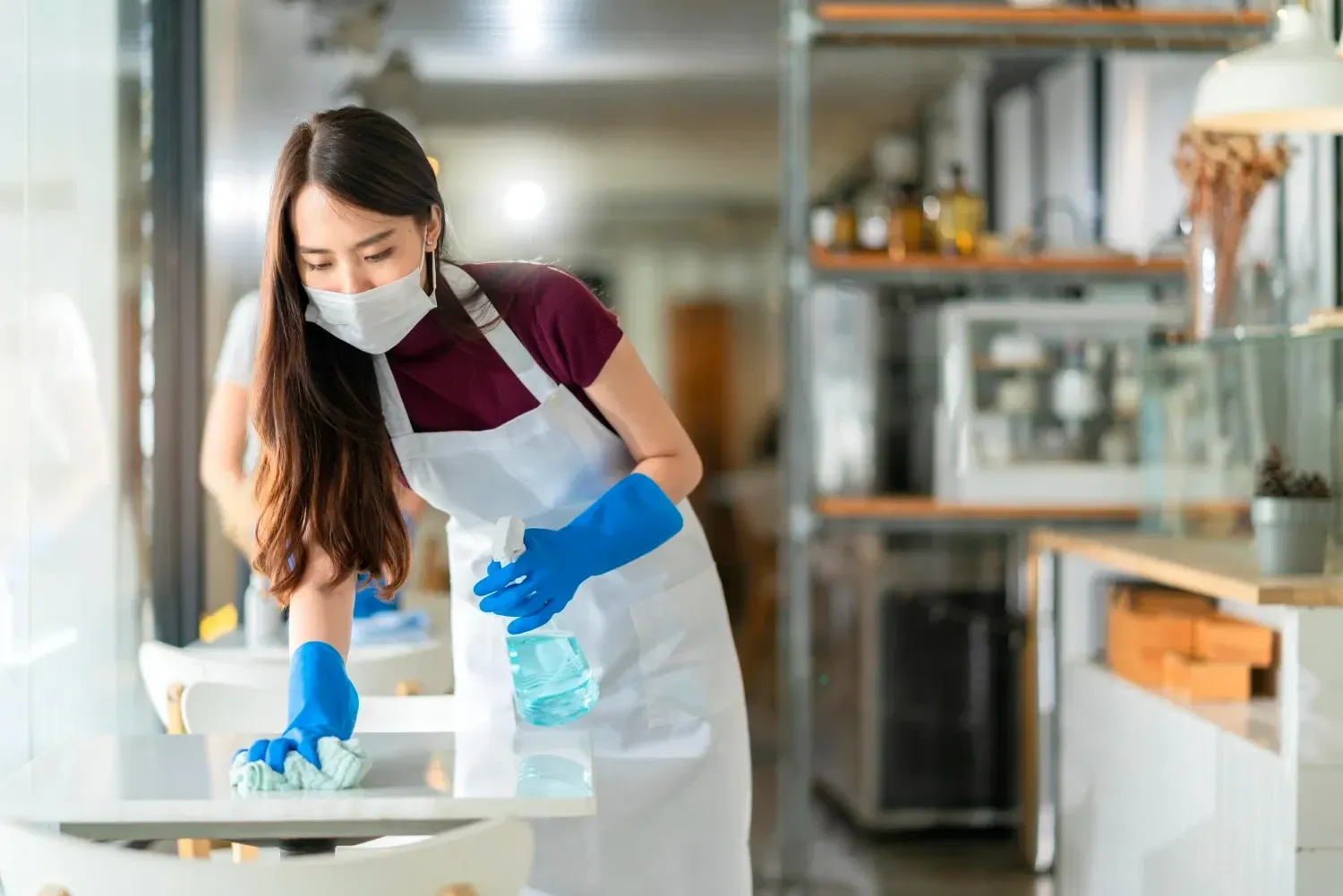
Restaurant staff clean “what they see.” A professional service cleans “what you don’t see,” but inspectors and bacteria do. Professionals use high-pressure steam disinfection and professional-grade chemicals that a rag and common bleach simply cannot eliminate.
Perhaps the most tangible value of a professional service is peace of mind during a Health Department or FDA inspection.
In this regard, it is important to highlight that professional cleaning companies provide detailed logs and service certificates and stay up to date on which chemicals are allowed and which are not. The incorrect use of a chemical by an inexperienced employee can result in a serious violation during an inspection.
To conclude, below is a comparison table summarizing the differences in terms of cost, quality, and risk between in-house cleaning and using a professional cleaning service.
Comparison Table: In-House Cleaning vs. Professional Cleaning
| Variable | In-House Cleaning (Own Staff) | External Professional Cleaning |
|---|---|---|
| Real Cost | High (overtime, low efficiency, purchase of chemicals) | Controlled (fixed fee, high efficiency) |
| Quality | Variable (depends on staff fatigue) | Standardized and Guaranteed (fixed protocols) |
| Labor Risk | High (untrained staff handling strong chemicals) | None for the restaurant (assumed by the provider) |
| Audits / Inspections | Reactive (deep cleaning only before inspections) | Proactive (constant maintenance of standards) |
Ready to elevate your guest experience?
Need expert commercial cleaning or property maintenance support? Contact our team today and learn how we can help your office building shine all year long. Or you can take a look at some the services that Gemilang offers for commercial buildings!
📞 Contact us today to schedule a consultation and protect your investment!
Gemilang offers a wide area of services for both commercial and residential customers. To see more of what Gemilang can do for you, click here for our list of services